

Income summary account is a temporary account used in the closing stage of the accounting cycle to compile all income and expense balances and determine net income or net loss for the period. The net balance of the income summary account is closed to the retained earnings account. This way each accounting period starts with a zero balance in all the temporary accounts. The income summary is a temporary account that its balance is zero throughout the accounting period.

Revenue Recognition
It allows for transactions to be reflected correctly in the right financial period as long as it is accurately closed out at the end of every financial period. If your revenues are less than your expenses, you must credit your income summary account and debit your retained earnings account. If your revenues are greater than your expenses, you will debit your income summary account and credit your retained earnings account. Without closing revenue accounts, you wouldn’t be able to compare how much your business earns each period because the amount would build up.
Close income summary
You have also not incurred any expenses yet for rent, electricity, cable, internet, gas or food. This means that the current balance of these accounts is zero, because they were closed on December 31, 2018, to complete the annual accounting period. An accounting period is any duration of time that’s covered by financial statements.

What Is a Closing Entry?
After these two entries, the revenue and expense accounts have zero balances. Rather than closing the revenue and expense accounts directly to Retained Earnings and possibly missing something by accident, we use an account called Income Summary to close these accounts. Income Summary allows us to ensure that all revenue and expense accounts have been closed. Essentially, all opening entries of a new fiscal year balance sheet are the exact entries and figures of the previous period’s closing entries.
- It stores all of the closing information for revenues and expenses, resulting in a “summary” of income or loss for the period.
- If the balances in the expense accounts are debits, how do you bring the balances to zero?
- Remember, when using the double-entry system, you must always debit one account and credit another for the same amount.
- Whether your company uses single or double-entry accounting, you will need to ensure the proper method of opening and closing journal entries happens at the designated time.
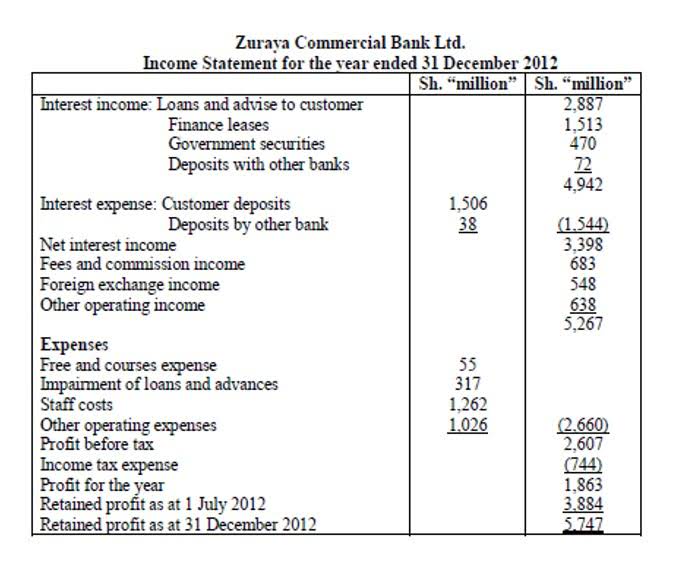
Notice the balance in Income Summary matches the net income calculated on the Income Statement. We know that all revenue and expense accounts have been closed. If we had not used the Income Summary account, we would not have this figure to check, ensuring that we are on the right path. After this entry is made, all temporary accounts, including the income summary account, should have a zero balance. All income statement balances are eventually shifted to retained earnings, which is a permanent account on the balance sheet.
- No matter which way you choose to close, the same final balance is in retained earnings.
- That means CCC has earned a net profit of $27,000 for the year ended 31 December 2022.
- To get a zero balance in a revenue account, the entry will show a debit to revenues and a credit to Income Summary.
- An income summary account is effectively a T-account of the income statement.
- The income summary account holds these balances until final closing entries are made.
- Kristin is a Certified Public Accountant with 15 years of experience working with small business owners in all aspects of business building.
- Once the temporary accounts are closed to the income summary account, the balances are held there until final closing entries are made.
Now that the revenue account is closed, next we close the expense accounts. You must close each account; you cannot just do an entry to “expenses”. If the balances in the expense accounts are debits, how do you bring the balances to zero? The debit to income summary should agree to total expenses on the Income Statement. Likewise, shifting expenses out of the income statement requires you to credit all of the expense accounts for the total amount of expenses recorded in the period, and debit the income summary account.
How to Create Opening and Closing Entries in Accounting
- The main change from an adjusted trial balance is revenues, expenses, and dividends are all zero and their balances have been rolled into retained earnings.
- Temporary accounts are used to record accounting activity during a specific period.
- Opening entries, also known as initial entries, are made at the beginning of an accounting period.
- The account has a zero balance throughout the entire accounting period until the closing entries are prepared.
- At the end of a period, all the income and expense accounts transfer their balances to the income summary account.
- This net balance of income summary represents the net income if it is on the credit side.
- This income balance is then reported in the owner’s equity section of the balance sheet.
Because expenses are decreased by credits, you must credit the account and debit the income summary account. When you manage your accounting books by hand, you are responsible for a lot of nitty-gritty details. One of your responsibilities is creating closing entries at the end of each accounting period. Notice that the balances in interest revenue Bookkeeping for Consultants and service revenue are now zero and are ready to accumulate revenues in the next period. The Income Summary account has a credit balance of $10,240 (the revenue sum).
Step 2 – Closing of Expense Accounts
Let’s explore each entry in more detail using Printing Plus’s information from Analyzing and Recording Transactions and The Adjustment Process as our example. The Printing Plus adjusted trial balance for January 31, 2019, is presented in the following Figure 1.28. The term can also mean whatever they receive in their paycheck after income summary account taxes have been withheld.

Income summary effectively collects NI for the period and distributes the amount to be retained into retained earnings. Balances from temporary accounts are shifted to the income summary account first to leave an audit trail for accountants to follow. Temporary account balances can be shifted directly to the retained earnings account or an intermediate account known as the income summary account. Permanent accounts track activities that extend beyond the current accounting period. They’re housed on the balance sheet, a section of financial statements that gives investors an indication of a company’s value including its assets and liabilities.